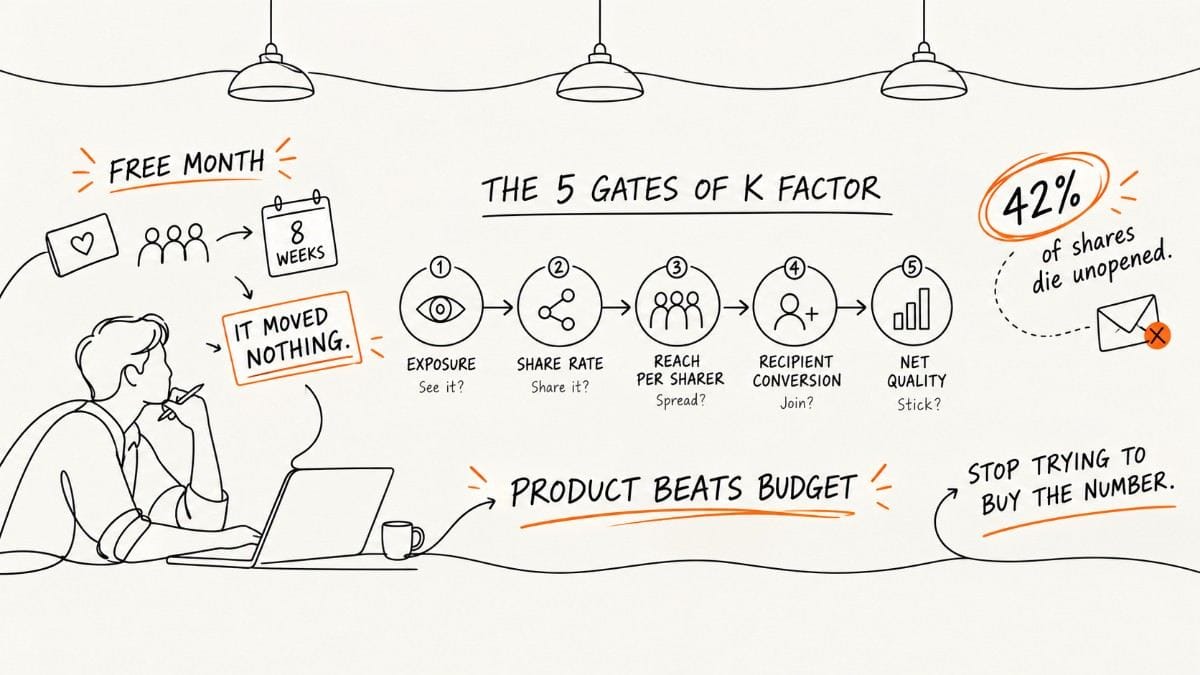
"just post more" is the most useless advice on the internet. founders do not need motivation to grind, they need a distribution machine.
i wrote separately about why we ended up here, why building got solved and distribution didn't, and what that does to good products. this piece is about how to run the distribution side, and why the fastest way to do it is to stop inventing.
#most founders don't lose on product, they lose because nobody sees it
you can ship a great app, a clean saas, a clever ai tool. it still gets buried, because distribution is the hard part now.
every founder knows the feeling. you open tiktok and watch a random video do 500k. you open reels and watch a simple post pull thousands of comments. someone explains your category worse than you ever would, and somehow they're everywhere. then you look at your own thing and think: i should post more.
so you try. you save a few winners. you ask chatgpt for hooks. you open capcut. you make one video. you post it. 312 views. you give up.
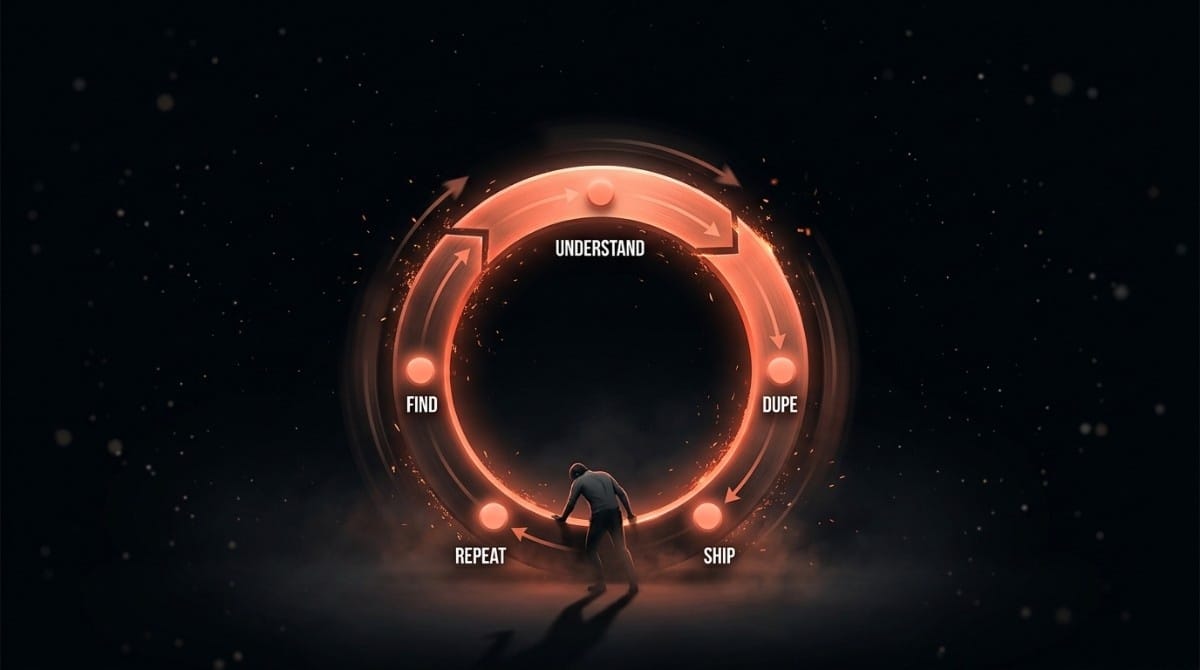
the problem is the process, not the effort. short-form isn't one creative task anymore. it's a loop:
- find what's working
- understand why it worked
- dupe it for your product
- ship it
- track it
- double down on the winners
- repeat every week
most founders either don't run that loop, or run it by hand, and it eats them alive.
#the bottleneck was research, not making
i scaled a consumer app to 50m+ organic views with zero paid spend, and the part that broke surprised me.
it wasn't making content. i figured out the hardware, the warmup, the accounts, the formats. at our peak with VAs we were shipping 100 to 200 pieces a day across a farm of accounts. the machine ran.
the bottleneck was figuring out what to make.
finding what to dupe is the real work, and it's brutally manual. four-plus hours a day scrolling, trying to tell if it was a genuine breakout or just a video from a big account doing its normal numbers. you usually can't tell what converts until it's already too late. and the second you outsource the making to escape the grind, ugc runs you $25 to $200 a video at any real scale.
distribution is a volume game before it's a quality game. one account shows you a lot of noise, forty accounts show you the pattern. but you only see the pattern if a human is sitting there reading all of it, all day, and for me that human was the constraint. the devices and the content were fine. the research was the limit.
#what makes a format worth copying
two numbers decide whether a video is worth duping.
the first is how far it beat its own account's baseline. we call it Outlier Score. a video pulling 2m off a 5m-follower account is just gravity. a video doing 200k off an account that normally gets 10k is a format that breaks out regardless of who posts it. that second kind is the only signal that transfers to you, and it's why raw view counts mislead.
the second is how hard the post moved people to act, which we call Pull Score, rated one to five. views are cheap, intent is what you want. a video with a million views and dead comments is worth less than a small one with people in the replies begging for the product.
then read the comments for what the audience is asking for: pain points, objections, product requests. that tells you whether a format converts before you copy it, not a week after. from there you take the winning structure and rebuild it for your app. you're adapting a proven pattern, not copying a video frame for frame.
i built Handler to do that research for me, because it's the growth operator i couldn't afford to hire back then. you talk to it like a teammate: ask for winners in your niche, why one popped, or what to shoot this week. its engine, TikSpy, pulls the top tiktoks in your industry and scores them, and Handler hands back a duplication kit: the regeneration prompt, the brand overlay, the sound recommendation and the adaptation notes. it covers edtech, fitness, finance, health, games and lifestyle, with DupeFarm (rebuilding winners with your own ai creators) and ReDupe (re-spinning the ones that hit) coming next. Handler launched on the 2nd of July, 2026.
#bigger teams win on volume, not ideas
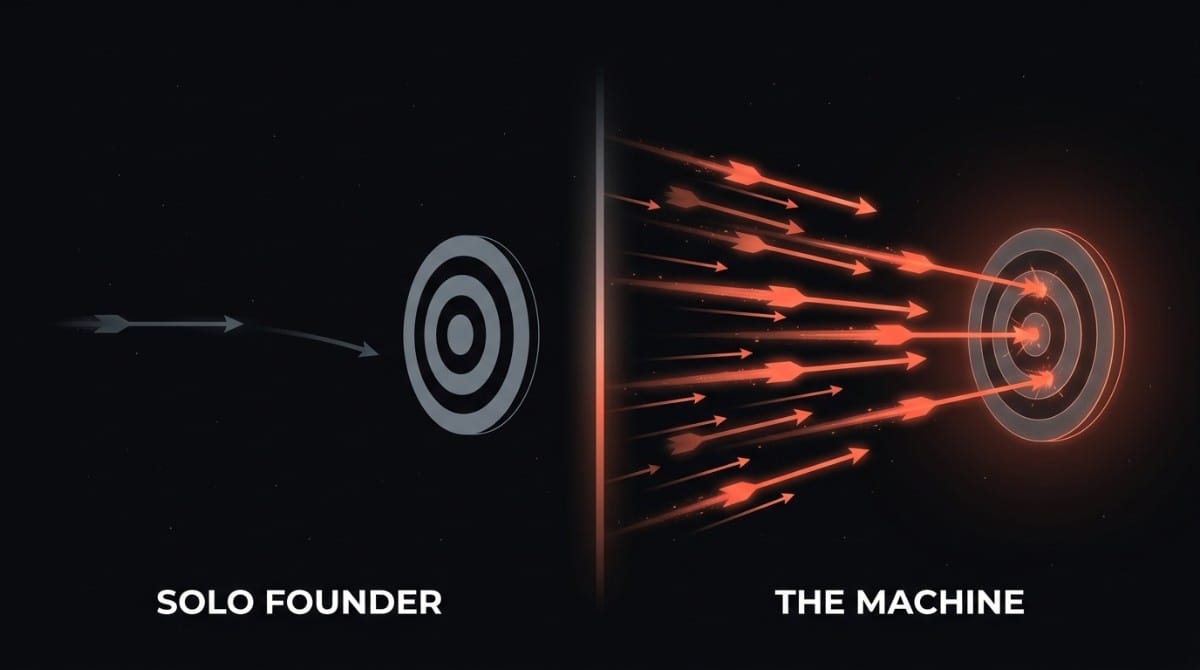
bigger teams don't have better ideas than you. they have more shots on goal.
they test more hooks, ship more formats and spot winners faster, because they have a research team feeding the machine. small teams almost never have that, and it's the difference between testing one angle a month and testing every week.
the old launch playbook is dead: a polished landing page, a product hunt day, a founder tweet, one launch video. none of it is enough on its own anymore. the products that win now keep showing up with a new angle, a new hook, new proof.
so stop inventing from scratch. build the product, find what's already working, dupe the winners, track what hits, and repeat.
the best product doesn't win. the one that dupes 100 proven formats while the competitor polishes one launch post wins.
new to the thesis behind all this? start with the barrier to building is gone, the barrier to being seen never moved →.
- An